TOKYO─Toshiba Corporation (TOKYO: 6502, hereinafter “Toshiba”) and a team led by Professor Yozo Nakazawa at the Department of Pediatrics, Shinshu University, (hereinafter “Shinshu University”), have together developed a “tumor-tropic liposome technology” for gene therapy*1. The technology uses unique, nano-sized biodegradable liposomes developed by Toshiba to accurately and efficiently deliver therapeutic genes to targeted cancer cells, and achieves safer gene delivery than viruses used as carriers.
The tumor-tropic liposome developed by Toshiba can deliver therapeutic genes selectively to tumor cells, not normal cells. Shinshu University and Toshiba have demonstrated that the tumor-tropic liposome can deliver the therapeutic gene to T-cell leukemia cells and achieve a 30-fold increase in uptake and 400-fold increase in gene expression than normal T-cells. The technology is expected to reduce burdens on patients during treatment, and offers the potential to develop new treatments for other cancers.
Shinshu University and Toshiba presented the technology at the 2020 Annual Meeting of the American Society for Gene & Cell Therapy (ASGCT 2020) on May 12 (presenter: Shoji Saito, Shinshu University School of Medicine).
Gene therapy applies the latest advances in biotechnology to treatment of disease at the level of gene expression—using information from a gene to synthesize a functional gene product in an affected cell. In cancer therapy, it inserts therapeutic genes into target cells, where they can repair and enhance cell functions. While a highly promising way forward, even for cancers that are difficult to treat, gene therapy is not yet settled science, and there are still hurdles to overcome, including how best to get genes into cells.
Therapeutic genes need a carrier to introduce them into a cell, because the nucleic acid that encodes the DNA and RNA that triggers gene expression cannot penetrate the cell membrane. Current approaches often achieve this by using a virus as the carrier. However, it brings with concerns for the risk of infection and cell tropism.
Shinshu University and Toshiba are collaborating in research to utilize biodegradable liposomes as non-virus carriers of therapeutic genes. They have developed tumor-tropic liposomes that safely and effectively deliver therapeutic genes to targeted cancer cells.
Toshiba has applied its know-how in materials technology to the design of liposomes with lipids that degrade naturally in cells, as their major component. The company’s research has confirmed that adjusting lipid composition to cell membrane characteristics realizes liposomes that can carry therapeutic genes to specific target cells (Figure 1). The delivery is also highly efficient, as a comparison of tumorous cells and normal T cells found that the former surpassed the latter in therapeutic gene uptake and expression by 30-times and 400 times respectively.
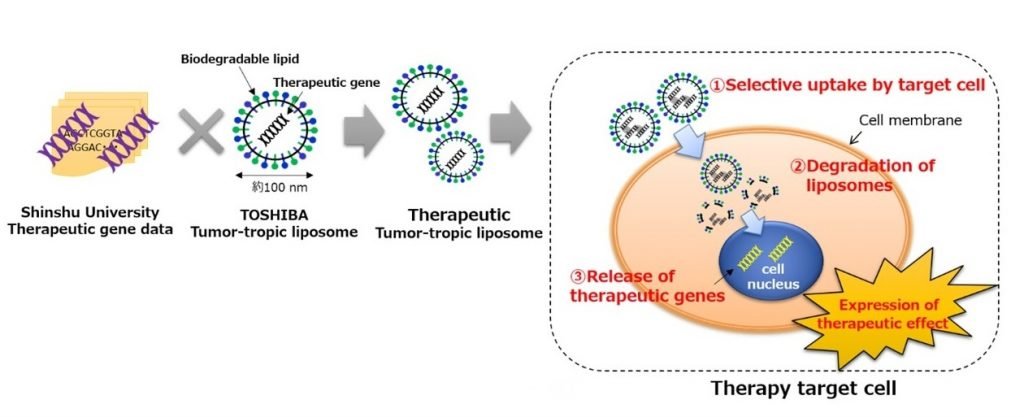
Figure 1 The biodegradable liposome technology targeted by the research
Shinshu University has demonstrated that the biodegradable liposome is an effective and efficient carrier for delivering therapeutic genes into tumor cells by experimentally administering tumor-tropic liposomes carrying therapeutic genes into T-cell tumor bearing mice. The results also confirmed successful suppression of tumor growth (Figure 2). As there is no effective treatment for relapsed or refractory T-cell tumors, Shinshu University is continuing research toward a solution.
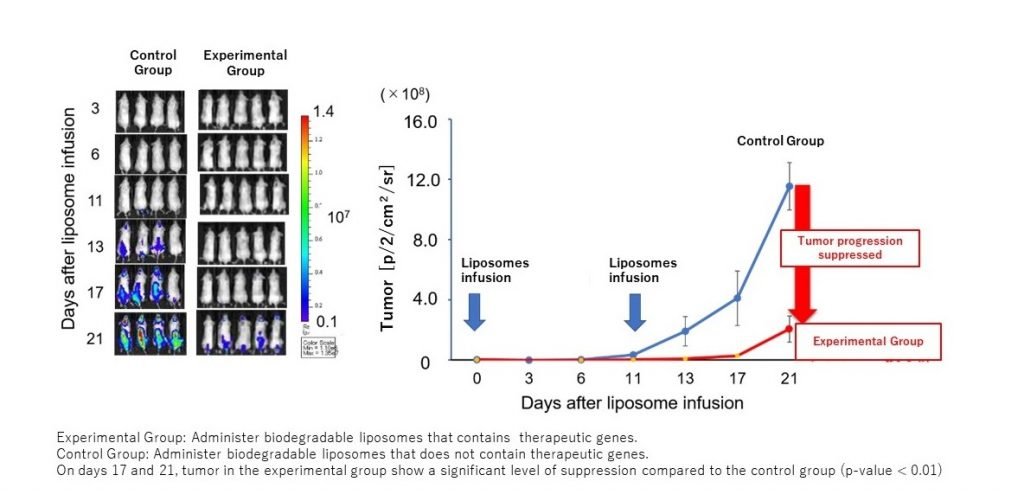
Figure 2 Verification of the effects of tumor-tropic liposomes on mice bearing T-cell tumors
Toshiba will continue to contribute its specialized capabilities in materials science to the collaboration with Shinshu University, in support of further enhancing the delivery and application of cancer-directed liposomes and promoting the widespread use of gene therapy.
*1 Gene Therapy
A method of treating a disease by inserting a gene into a cell in order to restore, enhance or suppress its function. It is based on the physiological action of a protein produced by the gene.