TOKYO—Researchers at Japan’s Toshiba Corporation (TOKYO: 6502) have announced a significant advance in their work to develop an efficient, low cost and highly reliable tandem solar cell that raises the output of solar panels by layering a transparent solar cell over a standard silicon cell.
Building on their achievements to date, the researchers have reported a transparent cuprous oxide (Cu2O) solar cell with a conversion efficiency (PCE) of 9.5%, the highest level yet achieved for a Cu2O cell(*1). This was realized by enlarging its predecessor, announced in December 2021, and points to the potential for mass production. The new cell is expected to provide a boost for the development of EV that do not require plug-in charging, and to advance other mobility applications, such as high-altitude platform stations, telecom platforms in the stratosphere.
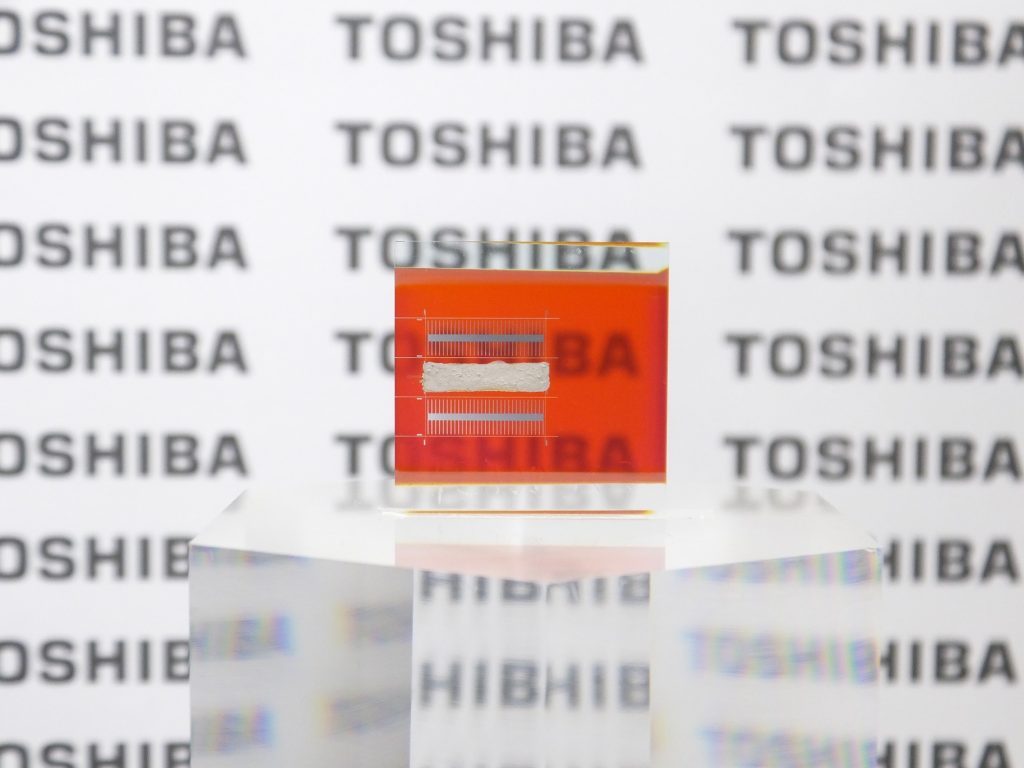
Figure 1: Toshiba’s newly developed Cu2O solar cell delivers a high 9.5% PCE.
Worldwide promotion of renewables as a mainstream energy supply, and of efforts to electrify transportation, is creating opportunities for solar cells. Toshiba is committed to using its technological capabilities to advance carbon neutrality, and as part of this is developing highly efficient and reliable low cost tandem solar cells that can be mounted on vehicles and trains, which offer only limited installation space.
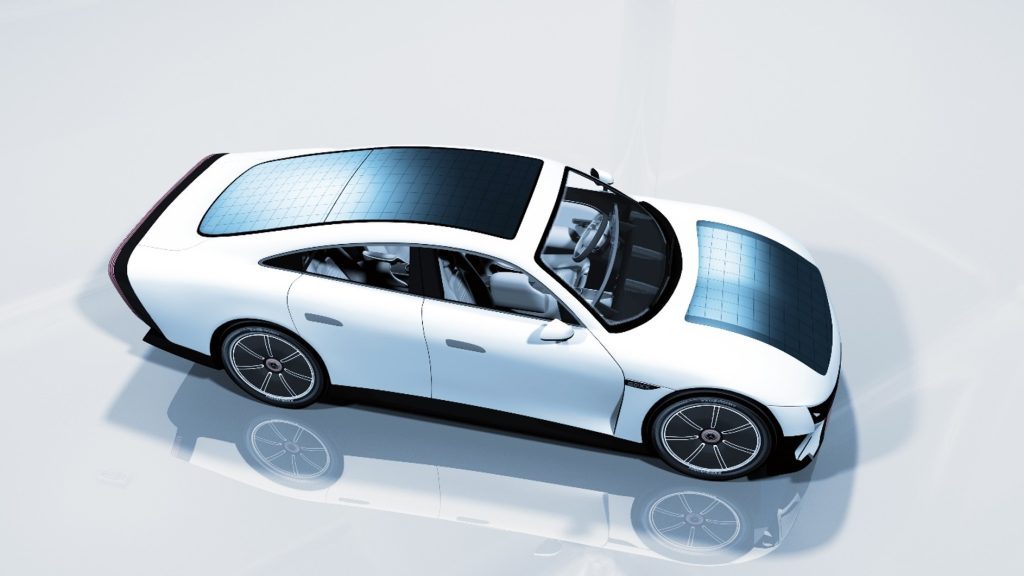
Figure 2: Artist’s impression of Cu2O-Si tandem solar cells installed in an EV
Tandem cells position a solar cell over a standard silicon cell. The cells generate power at different wavelengths, raising areal output, and have great potential to boost the efficiency of solar modules. In addition to Toshiba’s transparent Cu2O cell, work is being done on two other tandem cell technologies: fabrication with gallium arsenide (GaAs) or other III-V materials(*2); and perovskite crystal thin films. Production costs for the former range from several hundred to several thousand times the cost of a single silicon cell, severely restricting application. The latter cannot yet deliver the necessary reliability and guaranteed output for the 20-years-and-more life of a silicon cell.
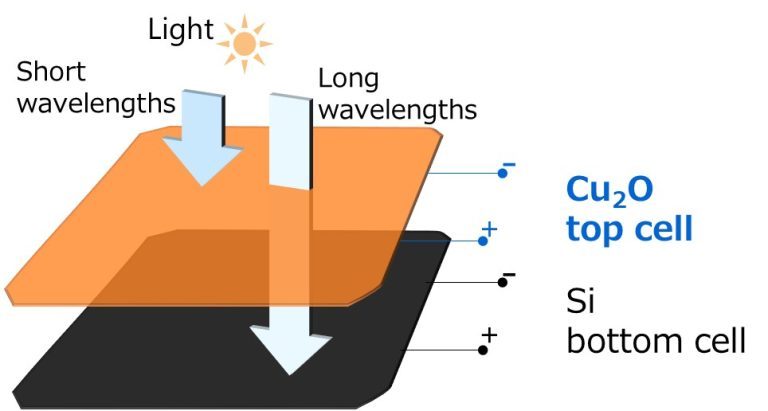
Figure 3: Schematic of Toshiba’s Cu2O-Si tandem solar cell.
Toshiba’s R&D focuses on the advantages of transparent Cu2O cells: fabrication with naturally abundant materials cuts costs; a hard and strong, and moisture resistant material, all guarantees of reliability (Figure 4); and light transmittance qualities that open the way to high level power generation efficiency.
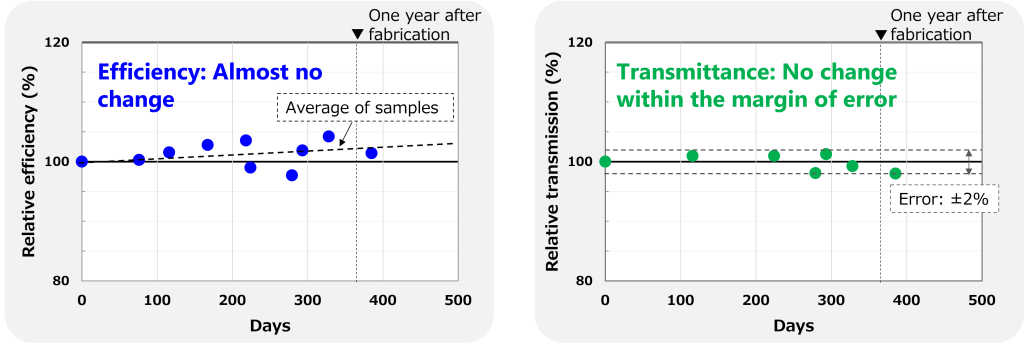
Figure 4: Almost no loss in power generation efficiency or transmittance in uncovered Cu2O cells in an indoor laboratory environment for a year demonstrate high reliability.
Toshiba’s painstaking efforts are now bearing fruit. In a research project supported by Japan’s New Energy and Industry Technology Development Organization (NEDO), researchers have pushed the PCE of the Cu2O cell to 9.5%, a full 1.1% over the 8.4% reported last year. It was achieved by enlarging the cell and suppressing carrier recombination in the edge of Cu2O generation layer, which degrades generation efficiency.
“We found that a larger cell size effectively suppresses photocarrier recombination,” explains Kazushige Yamamoto, a Fellow at Toshiba’s Corporate Research & Development Center, and leader of the research team. “Increasing the power generation area from the previous 3x3mm2 to 10x3mm2 produced a relative reduction in recombination in the edge of cell, and the resulting increase in photocurrent pushed the PCE to 9.5%.” (Figure 5)
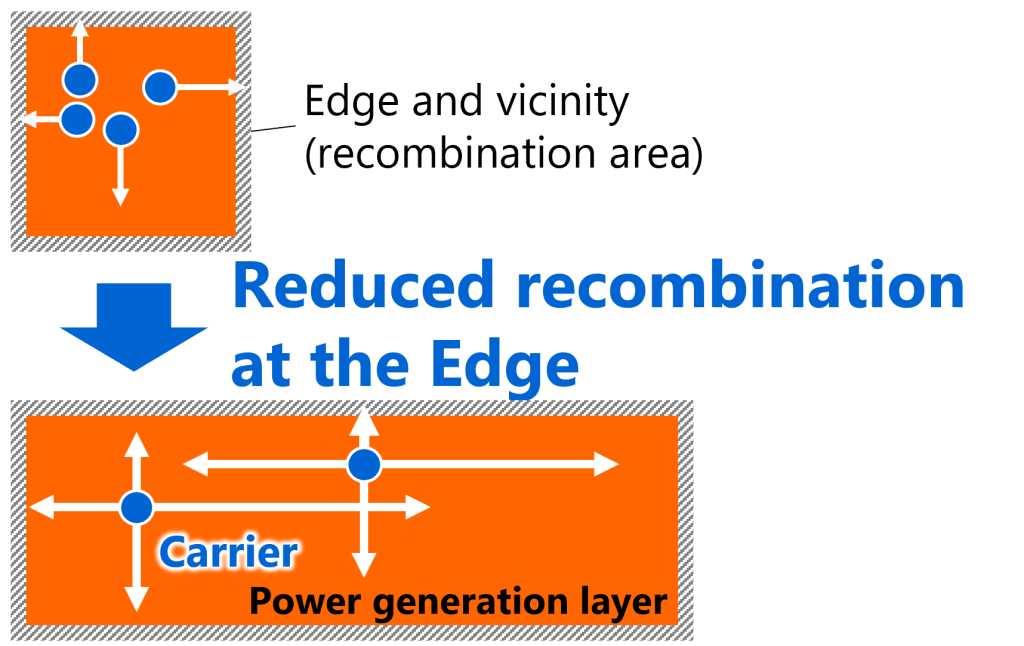
Figure 5: Movement of optical carriers when cell size is enlarged (viewed from top)
Toshiba has estimated that positioning the new Cu2O solar cell over a 25% PCE silicone cell realizes a Cu2O-Si tandem cell with a 28.5% PCE—notably surpassing 26.7%, the highest reported PCE for any standard silicon cell(*3), and close to 29.1%, the highest reported PCE for any GaAs cell.
Under test criteria defined by NEDO, Toshiba found that a one-time charge enables the current Cu2O-Si tandem cell to power an electric vehicle (EV) for 37km, and further improvements in solar cells toward the theoretical maximum efficiency of 42.3% are expected to extend the range to a distance approaching 55km. These are both recognized as practical distances for short trips without recharging, and would reduce charging frequency for longer trip.
Toshiba targets a practical Cu2O-Si tandem cell with a 10% PCE Cu2O cell and an overall PCE of 30%, and the new cell records solid progress to that goal. Looking to mass production, the company is working to enlarge cell size, and has made a prototype with a power generation area of 40mm2 and a PCE around 8% (Figure 6). The efficiency falloff in the larger cell is due to a less uniform layer and Toshiba continues to refine thin film deposition technology for uniform deposition over a larger area.
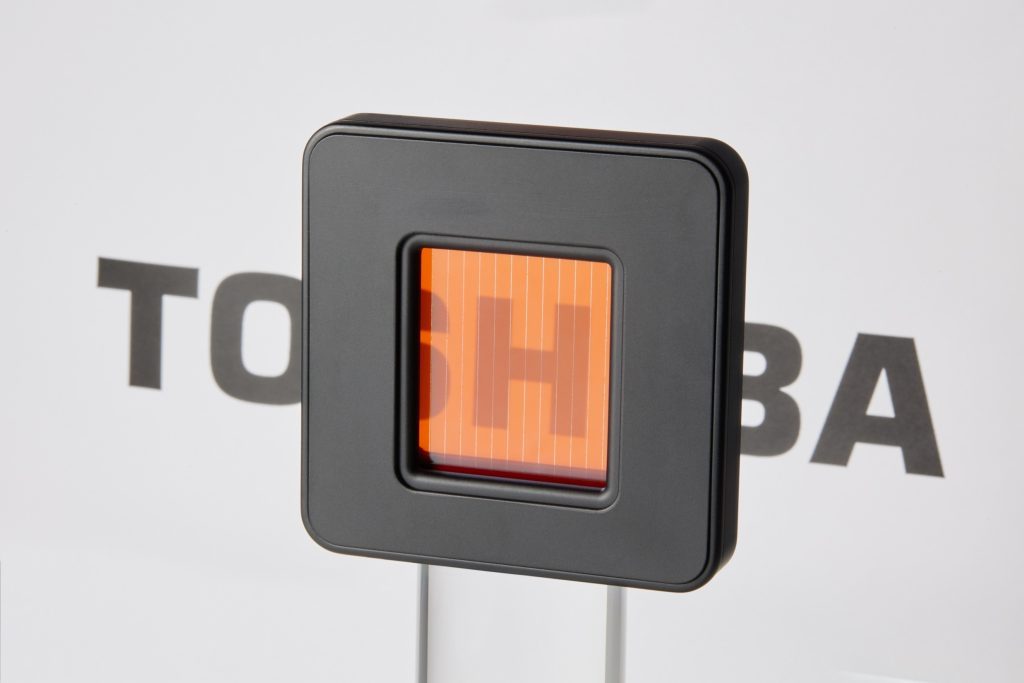
Figure 6: Prototype 40mm2 transparent Cu2O solar cell
Toshiba will exhibit this technology advance at CEATEC 2022, a hybrid international tech exhibition that will take place in Japan in October, and also present it at the 33rd International Photovoltaic Science and Engineering Conference (PVSEC-33), at the Nagoya Congress Center in Nagoya, Japan, from November 13 to 17.
Moving toward practical use in FY2025, Toshiba will cooperate with Toshiba Energy Systems & Solutions Corporation to develop manufacturing technology for tandem cells around the same size as today’s mainstream silicon solar cells. The company will also develop technology for producing 4-terminal Cu2O-Si tandem solar cells suitable for EVs and other mobility devices.
(Notes)
- Source: Toshiba
- A compound semiconductor solar cell formed with a group III element (gallium, aluminum, indium, etc.) and a group V element (arsenic, phosphorus, nitrogen, etc.)
- Source: Nature Energy 2, 17032 (2017)