An Aging Population, an Aging Infrastructure: How Structural Health Monitoring Combats Both of These Social Issues
- Highlights
Original article is hosted here.
Some may know of what is referred to as the “economic miracle” in Japan, wherein Japan experienced a period of rapid economic growth after World War II. As “miraculous” as this period was, it seems no wonder that much of the infrastructure in Japan—including roads, bridges and high-rise buildings—was constructed around this time.
It will also come as no surprise that now, half a century later, the conditions of these structures in social infrastructure have deteriorated considerably, and will continue to deteriorate. About 25% of bridges over 2 meters in length have passed the 50-year mark in 2018, with this number of the percentage going up to 63% by 2033.
The deterioration of this kind of social infrastructure may result in tragic accidents—most recently, approximately 130 meters worth of concrete panels on the roof of an expressway tunnel collapsed, causing multiple deaths in 2012. This was a catastrophic accident, one that embodied the dangers of structural degradation over time.
We are now entering an era where the maintenance and management of existing facilities and structures is gaining increasing importance.
One cause for concern, however, has been a shortage of the labor needed for this maintenance work, due to factors including a generally aging population in Japan. Which is why, here at Toshiba, we have developed a system for structural health monitoring that, by using sensors to “visualize” the interior health of structures, allows for more efficient and comprehensive inspections.
Detection internal damage which you can’t see
“After the tunnel collapse, a law was tightened to have regular inspections of bridges every five years. However, the conventional inspection methods have relied on direct visual checks and hammer tests, where a worker hits the bridge with a hammer and checks its condition by the sound it makes. This made it difficult to distinguish condition when there was above a certain level of deterioration, with no discernible changes in the surface and the sound.”
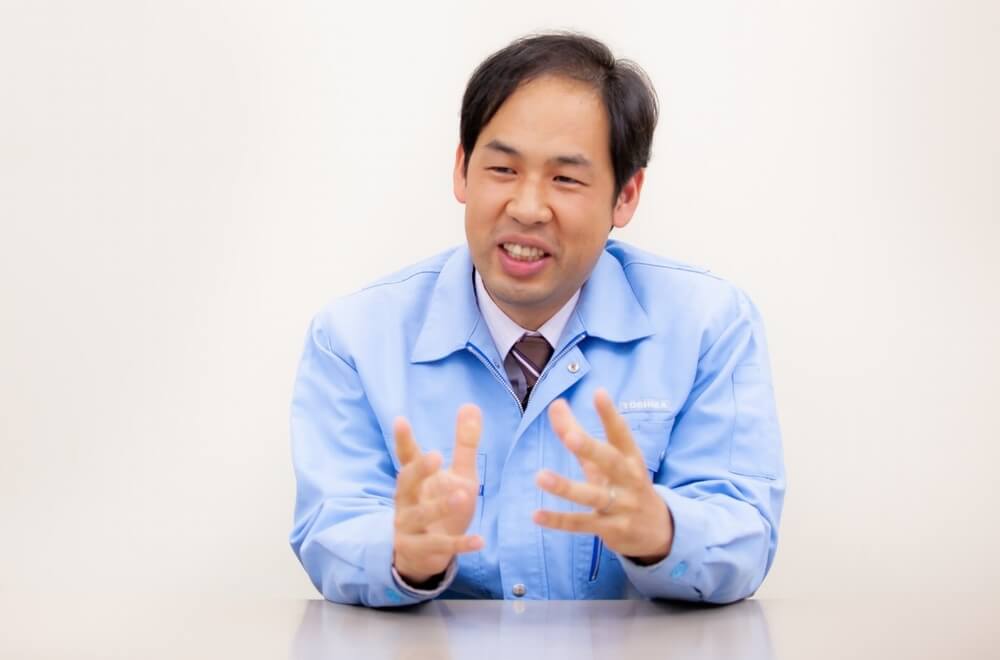
So says Kazuo Watabe, Chief Research Scientist of the Mechanical Systems Laboratory at Toshiba’s R&D Center.
He goes on, telling us that there are now approximately 150,000 bridges in Japan that are more than 15 meters long. In the past, it may have been possible for a limited number of workers to test each bridge with their own eyes and ears, basing their judgments on their experience and intuition. Nowadays, however, this method is incredibly unrealistic.
“So as part of the NEDO (New Energy and Industrial Technology Development Organization) ‘Robot and Sensor System Development Project for Infrastructure Maintenance and Disaster Survey,’ we decided to research and develop a structural health monitoring system with Professor Tomoki Shiotani of Kyoto University.” says Watabe.
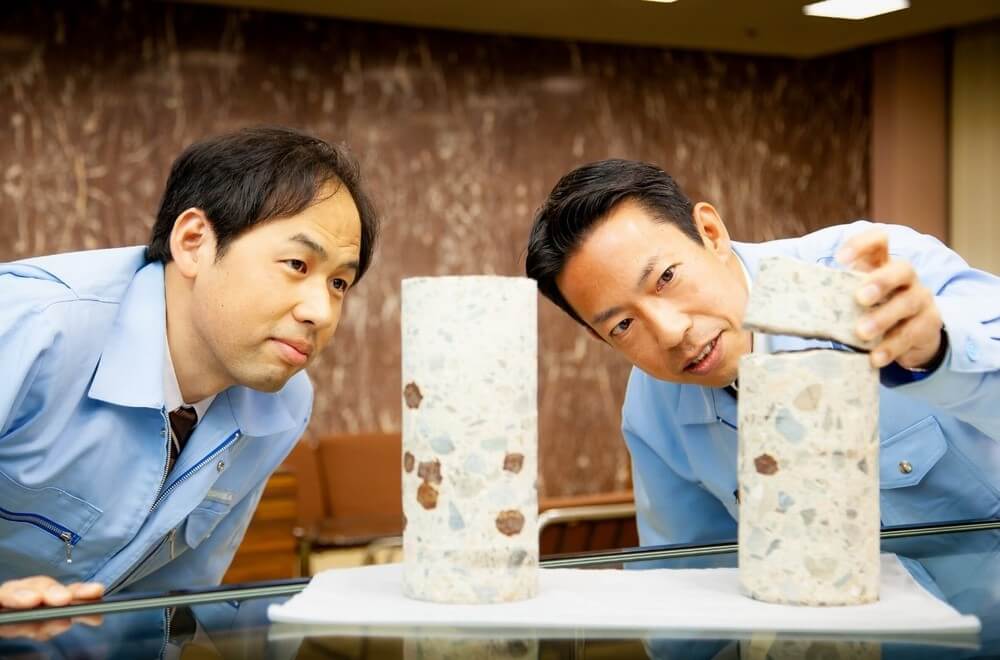
The most significant aspect of this structural health monitoring system is its brand-new sensing technology, which allows the system to “visualize” damage on the inside of the concrete, in areas workers cannot see directly, and determine the level of deterioration.
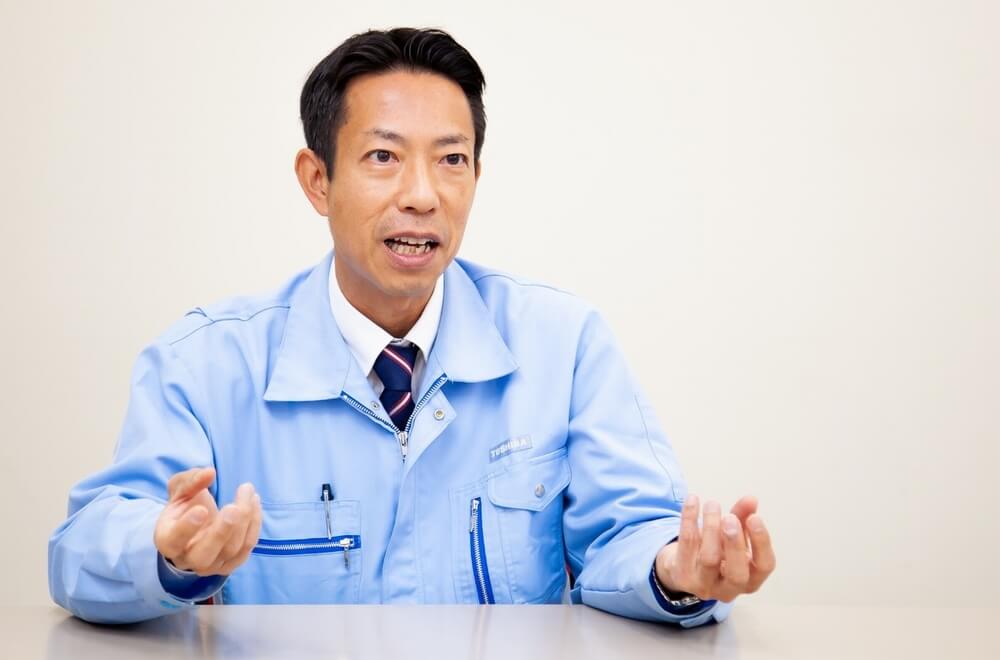
Kazuo Watabe, Chief Research Scientist, Mechanical Systems Laboratory,
Corporate Research & Development Center, Toshiba Corporation
“The benefit of being able to ‘visualize’ damage in the interior of the concrete is that we’re able to prioritize when it comes to maintenance. For example, during a dental check-up, you have some teeth that are severely damaged, some that are less damaged, and some that look like they’ll be damaged soon. Your dentist would prioritize treating the ones that are severely damaged. It’s the same thing when we’re able to ‘visualize’ damage with sensors— we’re able to figure out which bridges need maintenance the most, and make more efficient use of our limited labor and budget. Of course, if someone’s tooth is hurting, he’ll tell you it’s hurting, but bridges aren’t able to do that. This system allows us to check the condition of these bridges through visualization, so that we can maintain them properly and efficiently,” says Watabe.
Finding interior cracks in concrete using vibrations from vehicles
The agent at work in this new sensing technology is elastic waves, a wave emitted by miniscule forms of damage in structures. The vibrations induced when a vehicle drives on the bridge cause several dozen to several hundred kHz worth of elastic waves to be emitted from cracks in the structures. The sensor measures these waves from where it is attached to the deck of the bridge, using test called as AE Method¹.
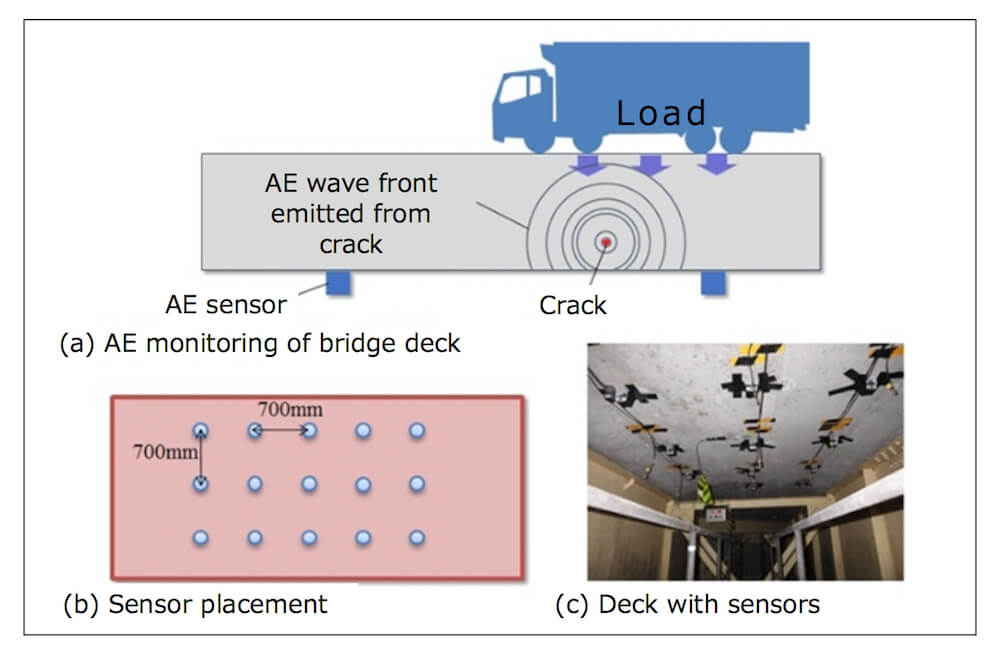
Image 1: Overview of AE measurement for bridges
1: AE Method
Acoustic Emission Method. A method used to measure waves emitted from miniscule forms of damage in the interior of solid objects.
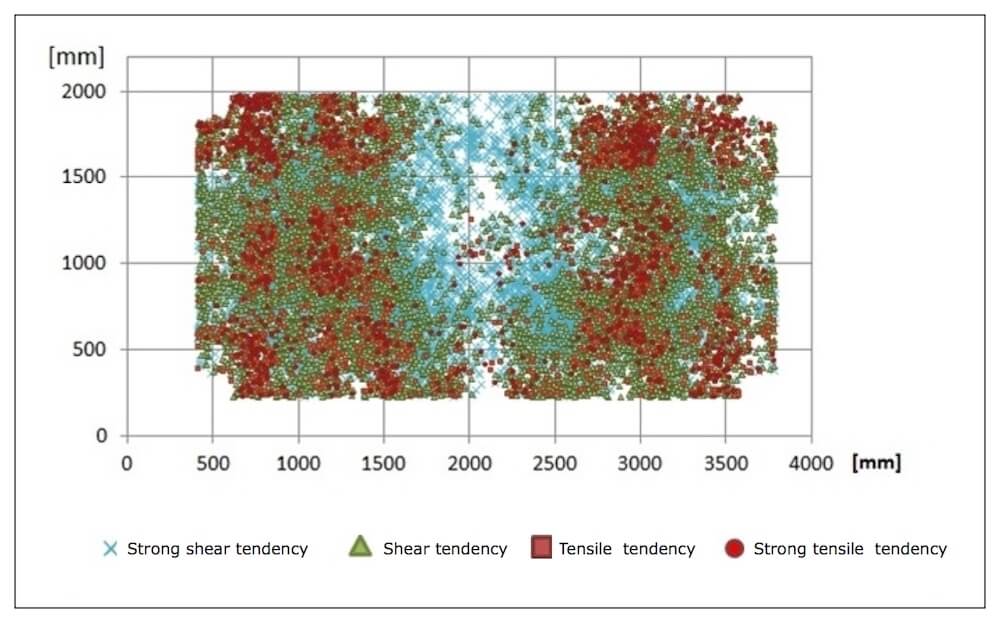
Tensile AE: AE emitted from areas where cracks have occurred and/or are growing
Image 2: Example of analytical results for AE measurement data
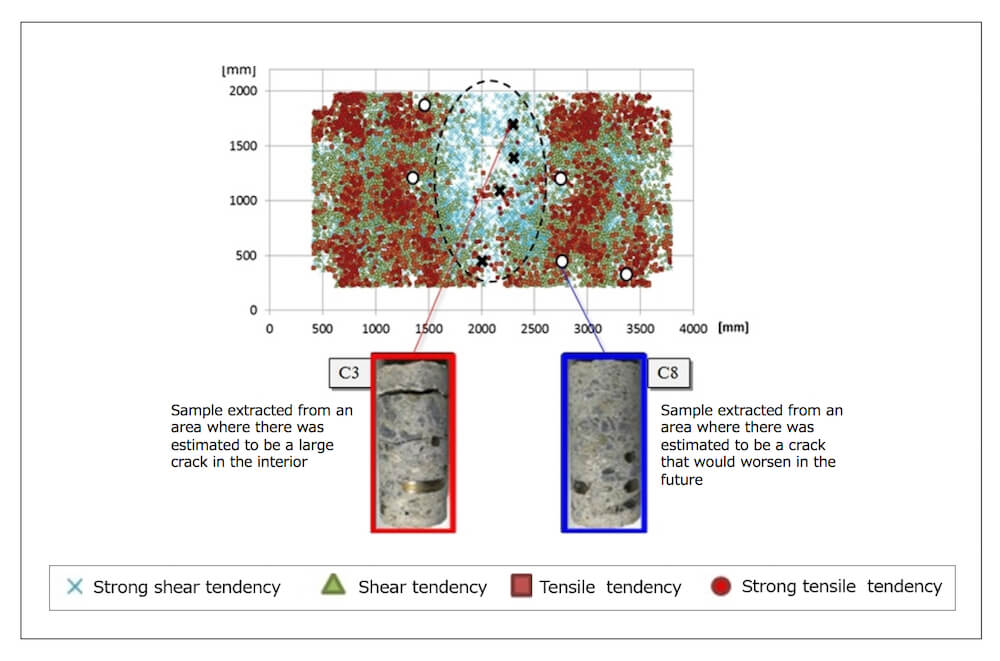
Image 3: Verification of analytical results through actual samples of the bridge deck
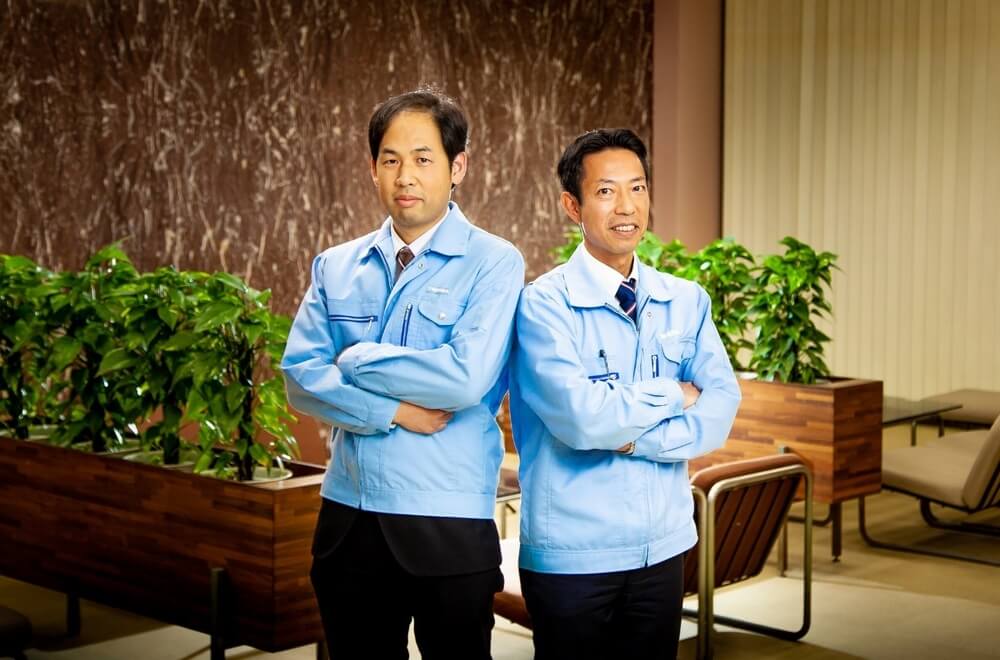
Takashi Usui, Research Scientist at Mechanical Systems Laboratory in the R&D Center, says that we took advantage of multiple resources within Toshiba in developing this sensing technology.
“AE sensors themselves have actually been used in different areas, but not many comprehensive systems are implemented in multiple areas. We were able to create an entire measurement system with AE sensors, including a system that processes the received signals, and quantifies degree of deterioration by the frequency and arrival times of the elastic waves. And I’m sure we were only able to do that because of the resources available to us at Toshiba,” says Usui.
Takashi Usui, Research Scientist, Mechanical Systems Laboratory, Research & Development Div.,
Toshiba Corporation (at the time of the interview)
Who knew a ‘guerrilla rainstorm’ could be helpful?
What’s more, they’ve discovered an unexpected benefit of the system in the verification tests they’ve been conducting.
“We were able to gain some unexpected data from a guerrilla rainstorm (a sudden, intense rainstorm) that occurred during our test. Generally, in a system that uses elastic waves, rain is considered noise, and verifiers want to avoid it as much as possible. But in this case, we found that the impact of the raindrops hitting the road caused elastic waves to be emitted, and that the calculated distribution of the raindrops reflects the position of cracks in the interior of the bridge deck,” says Watabe.
This means that they could, potentially reduce the amount of time required for the sensing process using something like a sprinkler truck instead of a guerrilla rainstorm. In this happy coincidence, they had managed to acquire several days’ worth of data (of cars running back and forth on the bridge) in about 10 minutes of guerrilla rainstorm. What’s more, this had opened up previously unexplored possibilities for this system of structural health monitoring. If there was strong rain, they could make use of every raindrop to sense deterioration, even in areas with less traffic.
“Looking even further, I’d say we may be able to apply the same kind of monitoring to roads, buildings, and even large-scale industrial machinery in the future. This issue of structural deterioration is going to occur in a variety of fields, and we’re confident that we’ll be able to come up with many different ways to implement this system,” says Usui.
For now, they say, they will carry out verification tests, collect and analyze data, and work to improve the reliability of the system. If this form of structural health monitoring becomes common—hopefully in the near future—the maintenance of social infrastructure will require less labor and cost. And surely there is no greater contribution to society than keeping its people safe and secure.
*This work was supported by the New Energy and Industrial Technology Development Organization (NEDO) of Japan.